Insulating Protective Tape – Optimized with Our Automation Equipment

Reliable protection, controlled application, and repeatable performance—engineered for demanding environments.

Why Insulating Protective Tape?

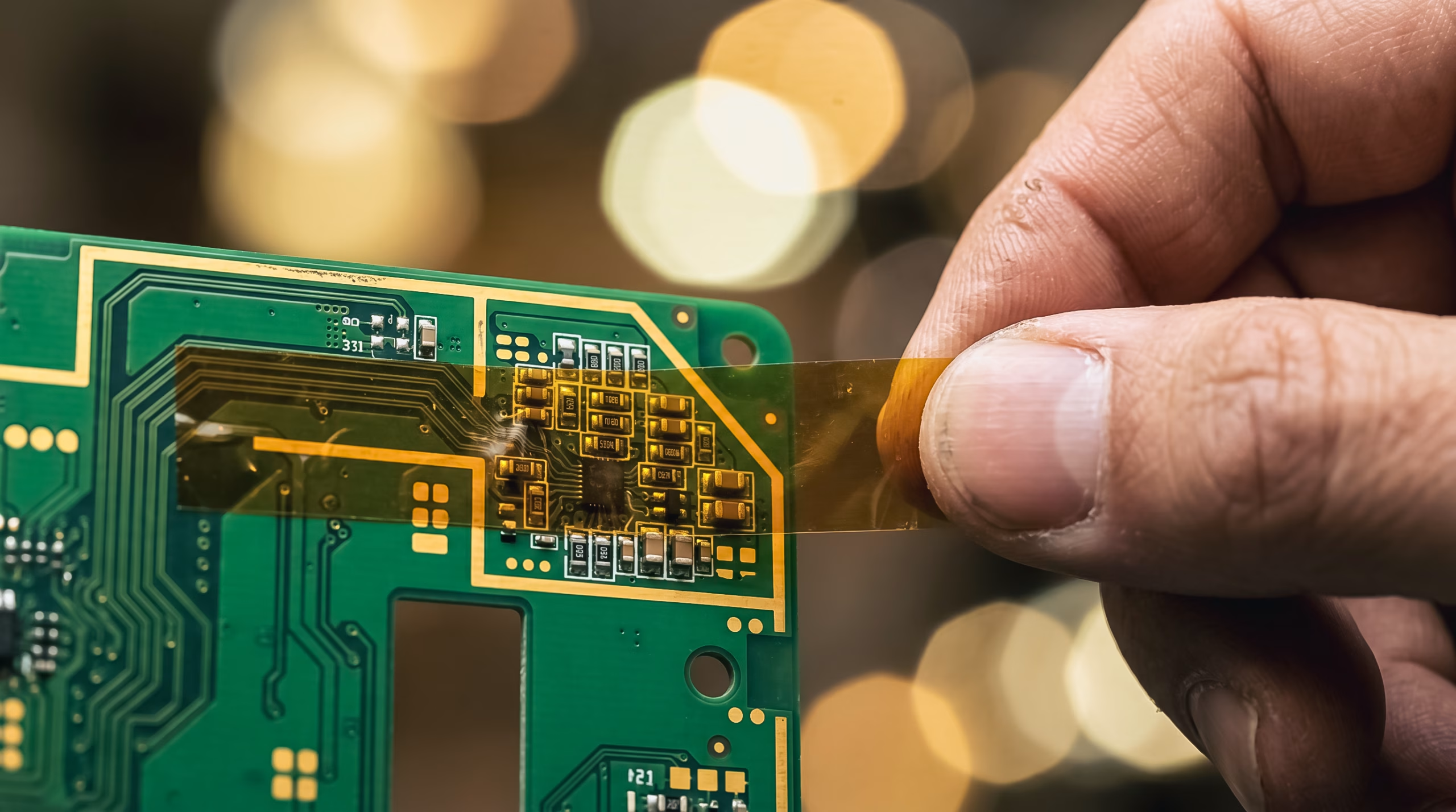
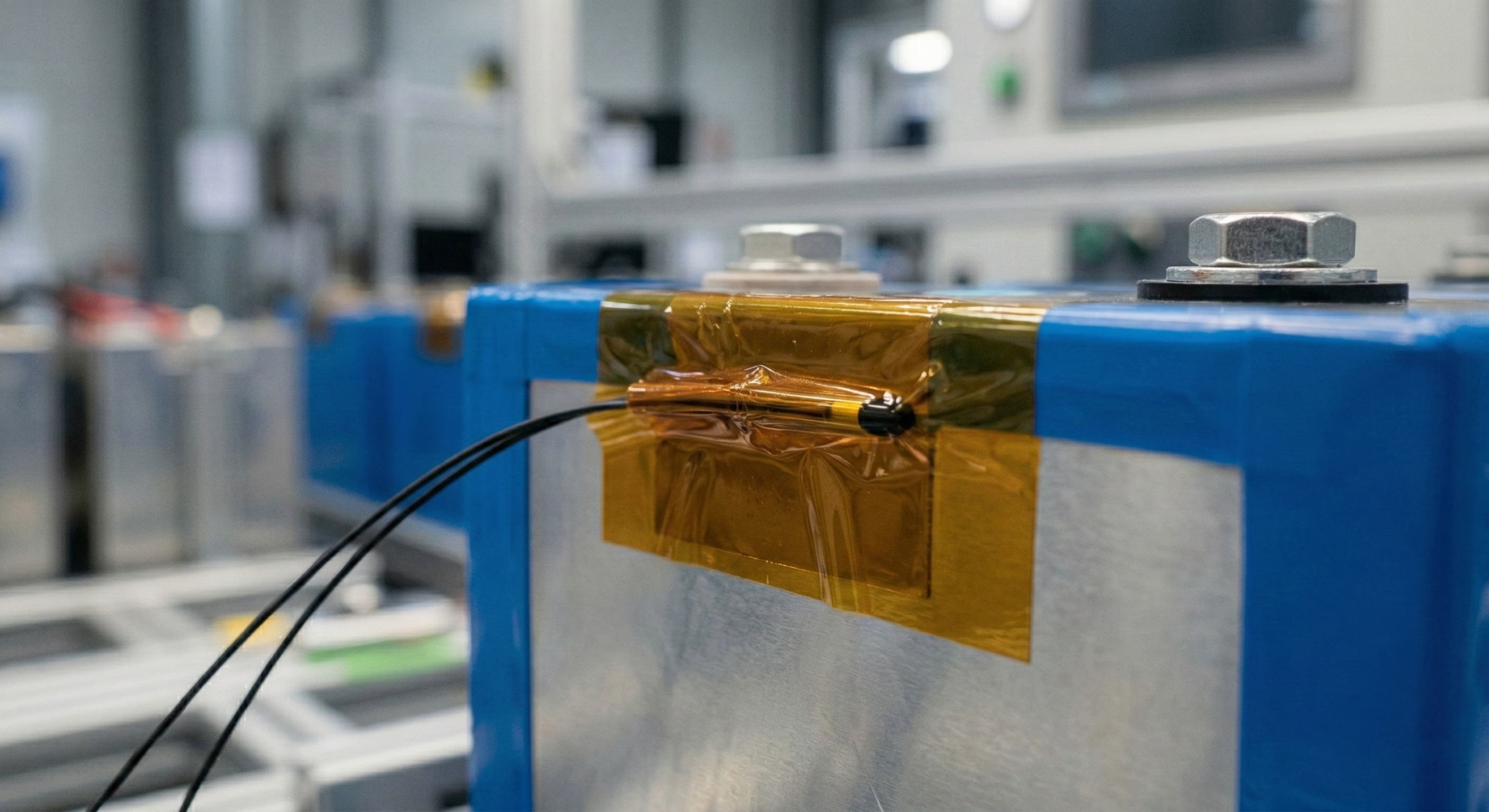
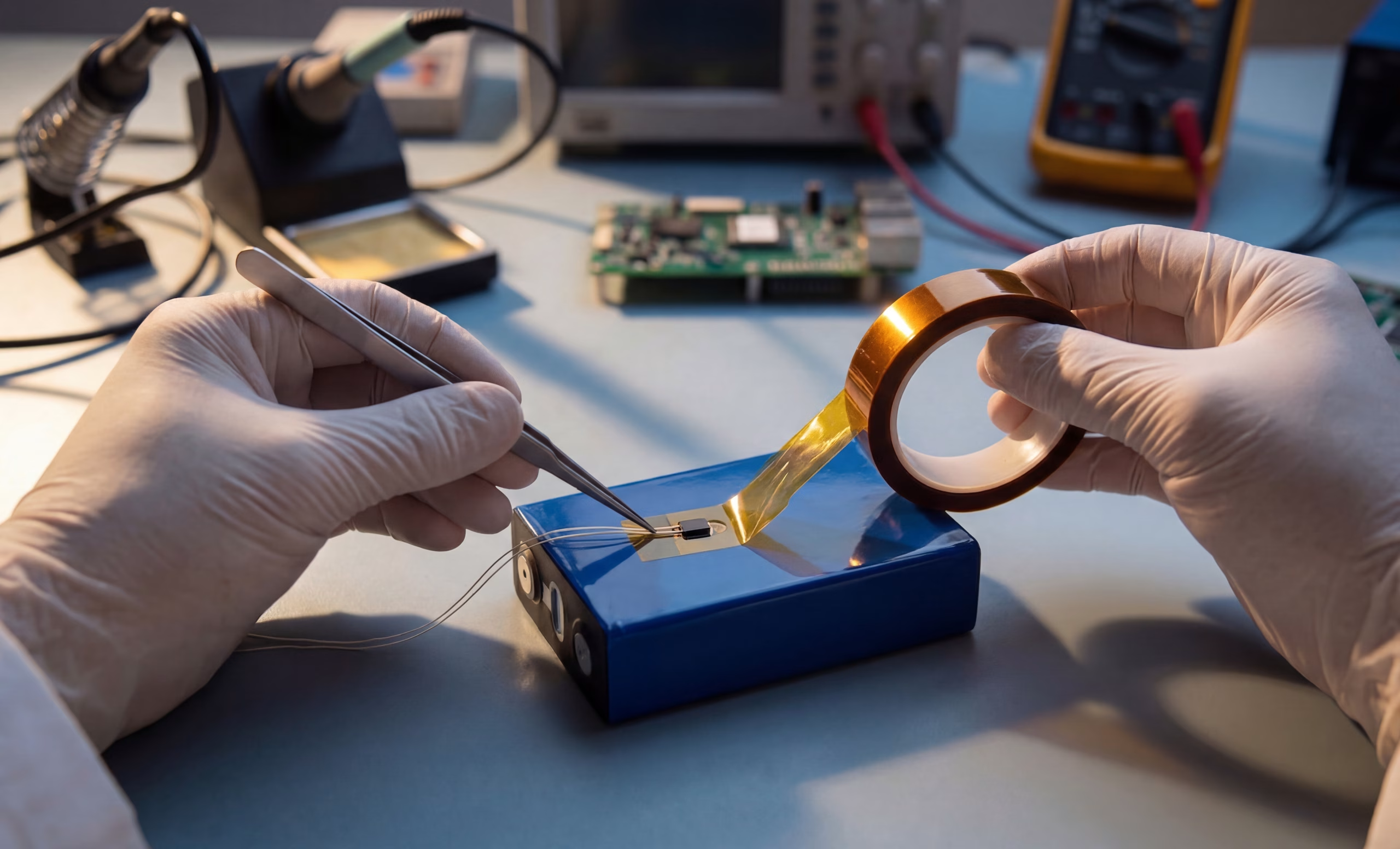
Insulating protective tapes provide electrical isolation, surface protection, and environmental shielding—often serving both temporary and permanent functions within a single process.

Manufacturers rely on insulating and protective tapes to achieve:

  • Electrical insulation and dielectric protection
  • Surface protection during manufacturing, transport, and installation
  • Abrasion, moisture, and contamination resistance
  • Clean removal where temporary protection is required

Straub Design equipment ensures these benefits are delivered consistently and efficiently on the production floor. 

Automated, Repeatable Insulating Protective Tape Application

Insulating and protective tapes perform best when applied with controlled placement, stable tension, and careful handling. Straub Design automation systems regulate these variables to deliver uniform coverage and repeatable protection—run after run.

Consistent Placement You Can Trust

Manual application of protective tapes often results in crooked placement, inconsistent overlap, or exposed edges. Straub Design automation ensures accurate, repeatable placement for continuous runs, discrete segments, and complex paths—without operator variability.

Controlled Contact & Conformability

Many insulating and protective tapes must conform to contours, corners, and varying surfaces. Our systems use compliant rollers and tuned contact mechanisms to promote smooth adhesion without wrinkles, bubbles, or stretch.

Precision Feed, Cut, and Tension Management

Protective films and insulating tapes can be sensitive to stretching, tearing, or misalignment. Straub Design systems manage tape tension, tracking, and feed speed to preserve material integrity and consistent coverage.

Clean Liner Management & Exposure Control

For tapes supplied with liners—or applications requiring temporary protection—Straub Design equipment can incorporate liner rewind, prestripper, and lowforce separation designs to expose adhesive or protective media exactly when required.

Built for Integration and Repeatability

Whether deployed as a standalone workstation or integrated into a fully automated production line, Straub Design solutions support highvolume, highreliability insulating and protective tape application across manufacturing, assembly, and finishing operations.

Common Industries & Applications

Straub Design equipment applies insulating and protective tapes across a wide range of industries, including:

Electronics & Electrical Assemblies

Automotive & Transportation

Appliances

Industrial Equipment

Construction & Building Materials

Typical applications include wire and cable insulation, surface masking, abrasion protection, temporary surface films, component shielding, and dielectric barriers.

Designed for Your Tape. Your Product. Your Process.

No two insulating or protective tape applications are the same. Differences in substrate, adhesive type, thickness, flexibility, and removal requirements all influence equipment selection and process design. 

Straub Design works closely with manufacturers to ensure: 

  • Proper tape path and guide design 
  • Optimized roller and guide materials for nonmarring contact 
  • Accurate tension and feed control to prevent stretch or damage 
  • Liner handling matched to adhesive and backing construction 
  • Programming aligned with your process flow and protection strategy 

The result is insulating and protective tape application you can trust—engineered around your exact requirements.

Let’s Improve Your Insulating & Protective Tape Application Process

Whether you’re protecting sensitive surfaces, insulating electrical components, or applying temporary films during manufacturing, Straub Design provides proven solutions built for reliability and scale. From compact standalone applicators to fully customized automation systems, we help manufacturers achieve consistent protection, reduced rework, and efficient production.